What CROs Are Focused on in 2026
What B2B software CROs prioritise in 2026: systematising buyer trust with LinkedIn, HubSpot and AI instead of adding headcount or pouring budget into ads.
What This Article Covers
- How a pipeline-first mindset creates more relevant opportunities instead of empty MQLs
- Why LinkedIn strategies for thought leadership and trust-building matter more than conventional leads
- How HubSpot provides maximum efficiency and transparency as a single source of truth
- Where AI and automation streamline processes while preserving human credibility
- How to integrate Marketing, Sales, and Customer Success around clearly defined ICPs
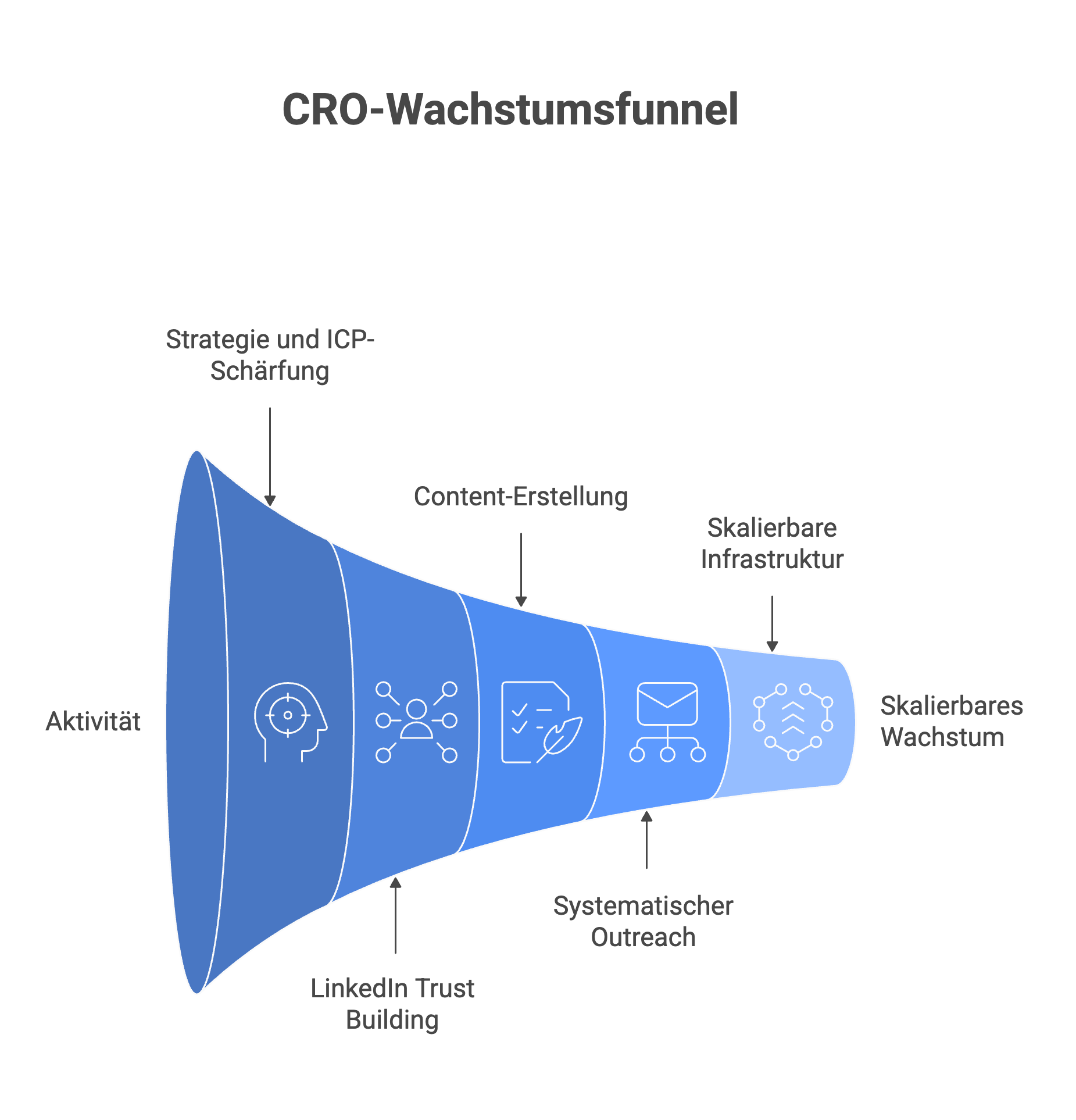
1. Pipeline Generation: From Activity to Trust
The traditional focus on volume—“more leads, more pipeline”—is becoming less effective. Today, quality beats quantity. A strong pipeline engine needs four pillars:
- Strategy and a sharper ICP: Who do you genuinely want to reach? Define what a “real” pipeline deal looks like and consistently use those characteristics in the CRM.
- LinkedIn trust-building: Invest in LinkedIn as a lever for personal visibility and thought leadership. Your reach as a CRO, together with that of your leadership team, directly strengthens trust in the brand.
- Content that moves buyers: Publish concrete solutions instead of glossy brochures. Webinars, case studies, and genuine use cases can all be tracked through HubSpot.
- Systematic outreach processes: Use a multichannel approach combining LinkedIn and email, supported by clearly measurable triggers and workflows.
Example: Through an orchestrated LinkedIn GTM strategy, Calibo not only generated significant reach but also closed a 400k deal after four months—without additional headcount, but through alignment and the repurposing of executive content.
2. Scalable Infrastructure: HubSpot as the Operational Core and Foundation of Trust
Growth rarely fails because of a lack of ambition. It often fails because of the infrastructure. Disconnected point solutions, expensive specialist tools, and Excel-based reporting cause teams to fly blind, create friction, and reduce efficiency.
The practical approach:
- Use HubSpot—or another unified CRM—as the operational backbone. Reduce tool sprawl so every team works from the same data foundation.
- Standardize the lifecycle and processes: establish clear ICPs, lifecycle stages, and automated workflows for handoffs between Marketing, Sales, and Customer Success.
- Use automation: routine tasks such as lead nurturing, data enrichment, and reporting run in the background, allowing teams to focus on buyer conversations and high-value advice.
Example: Workist saves €200k per year and can use its new pipeline transparency directly to manage Marketing and Sales.
3. A Precise Ideal Customer Profile: Customers Who Stay
Without a clear ideal customer profile, you waste resources. Involve Marketing, Sales, and Customer Success closely in defining and validating the ICP. Use HubSpot segments, scoring, and automated campaigns to focus targeted measures on accounts that genuinely fit. This increases conversion, deal size, and the likelihood of true recurring revenue.
Example: By sharpening its ICP, Brame doubled ARR and cut sales acquisition costs in half.
4. Scaling Trust: From Awareness to Understanding
Forget isolated lead and engagement metrics—credibility is what determines outcomes today. Trust-building begins long before the first direct contact, through:
- LinkedIn content that provides genuine value—not a pitch, but concrete insights for the target audience
- Webinars, white papers, and case studies: show how existing customers benefit. Offers should educate and solve problems instead of immediately pushing for a demo.
- A consistent chain of touchpoints: buyers receive all the information they need throughout their journey—automatically yet individually, triggered by their behavior.
Example: With a new trust-centered GTM campaign, Magnolia achieved not only greater visibility but also deeper engagement among buying decision-makers.
5. Turning Signals Into Genuine Sales Opportunities
Results come from systematically identifying and acting on genuine purchase-intent signals:
- Use HubSpot to identify relevant signals—such as visits to the pricing page or repeated webinar attendance—and prioritize those contacts through lead scoring.
- Structure the outreach around the signal, open-ended questions, and a clear call to action.
- Automate the Sales handoff, reminders, and lead nurturing in HubSpot so no genuine opportunity is lost.
Example: node.energy increased demo bookings fivefold by orchestrating signals and enriching them with AI.
6. Ending System Chaos With a Single Source of Truth
The foundation of predictable growth is an integrated system that continuously learns.
- Use one central platform, such as HubSpot, with clear dashboards, standardized processes, and automated orchestration.
- Introduce monthly pipeline reviews, pursue iterative optimization, and ensure close alignment among everyone responsible for revenue.
This allows bottlenecks to be addressed proactively, using real-time data instead of instinct.
7. Conclusion and Five Practical Steps
Buyer trust is the “new” currency of predictable, profitable growth. The future belongs not to the loudest providers, but to the most credible. Use technology to systematically remove friction, but never automate at the expense of genuine relationships.
Clear and practical: your next steps
- Pipeline audit and signal clarity: measure and optimize where deals are genuinely lost.
- CRM and infrastructure check: consolidate around one system—fewer tools and better data quality.
- LinkedIn and content pilot: launch a thought-leadership initiative, create awareness, and collect the first relevant metrics.
- Operationalize buyer conversations: train the team specifically in value selling and in addressing the cost of inaction.
- Seek expert exchange: use short sparring sessions to challenge your assumptions, uncover blind spots, and identify the strongest levers.
This is how you scale pipeline and revenue without sacrificing trust—or health.
Frequently asked questions
What are the four pillars of a strong pipeline engine?
Why does growth often fail because of infrastructure?
How do you turn signals into genuine sales opportunities?
A free 60-minute Launchpad clarifies which lever should move first. No pitch, honest fit / no-fit answer and a clear next step.